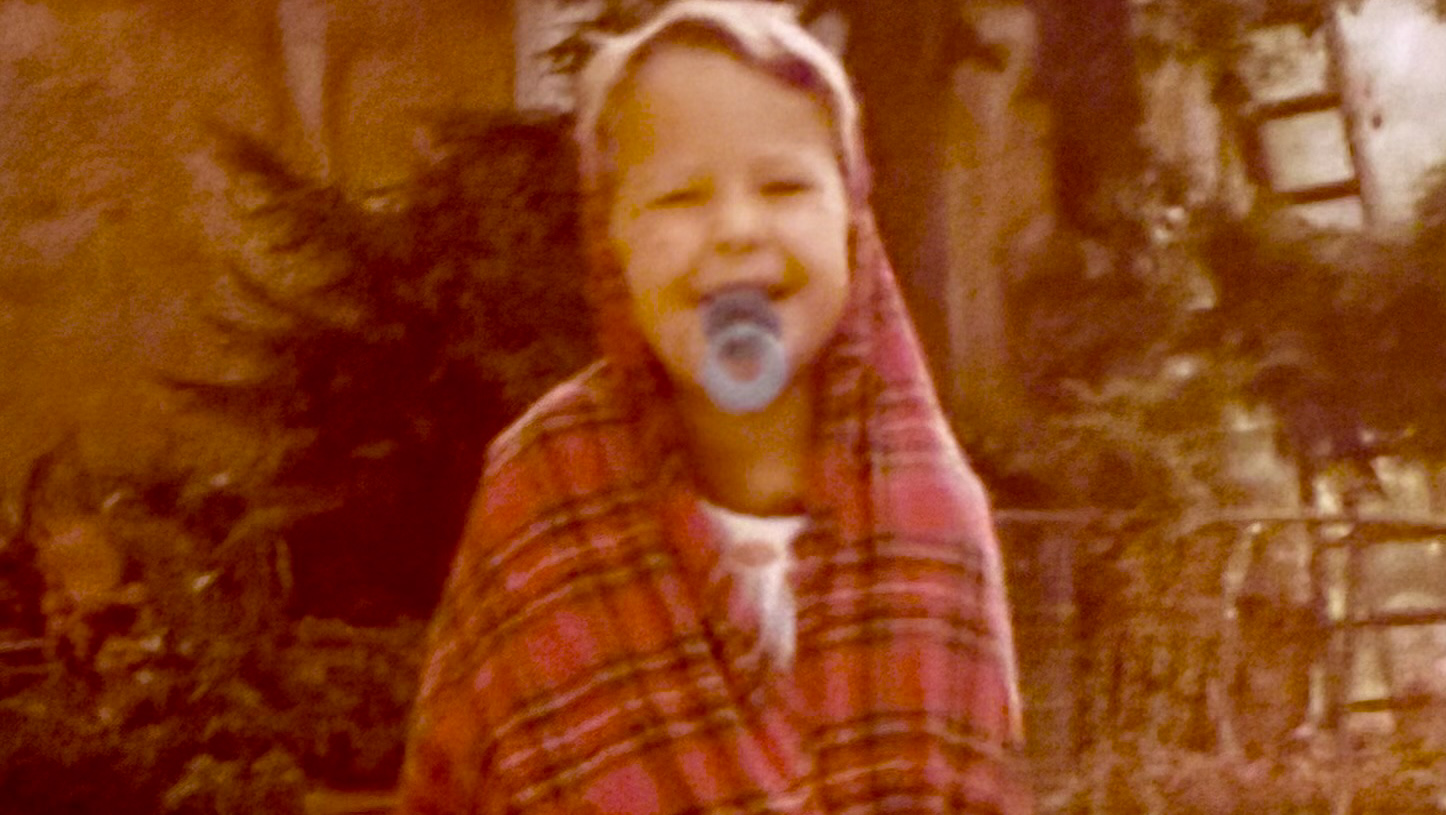
TIBORIAN is the artistic alter ego of Tibor I. Mueller, a Switzerland-born musician whose relationship with music began before language and never lost its power.
His first musical memory reaches back to the age of three. Sitting with his father, listening to Oxygène by Jean-Michel Jarre. Not as background, but as presence. That moment set a compass. Music revealed itself not as entertainment, but as a place. A sanctuary. Infinite, personal, emotionally precise. His father understood this instinctively and passed it on deliberately. From there followed Pink Floyd, The Doors, Led Zeppelin, Black Sabbath, Emerson, Lake and Palmer, The Velvet Underground, The Rolling Stones. Music was not curated. It was lived.
That lesson endured while everything else changed.
For decades, music remained a central companion and the only true constant. Something to look up to rather than interfere with. A realm of pure genius and brilliance, meant to be acknowledged, respected, and enjoyed. Music was never something to compete with or outdo. No matter how hard one tries, it cannot be planned, optimized, or surpassed by force. It exists on its own terms. Unlike most things in life, music never became boring. It never reached a ceiling. It never normalized. Jobs did. Places did. Skills did. People often did. But music remained elastic, personal, and inexhaustible. A refuge you can enter at any time, in any state. A teacher without dogma. A healer without promises.
Yet Tibor did not chase a stage.
He chose life first.
While music remained untouched, he built and dismantled careers, led and recalibrated organizations, negotiated complexity, failed, adapted, and moved on. He lived abroad for more than fifteen years, not as an observer but as a participant. Distance sharpened perception. Certainty dissolved into perspective. Roaming did not dilute identity; it refined it.
One principle governed everything: act as the guest you are. Respect local rules. Accept traditions. Understand before speaking. Loud opinions without lived experience never impressed him. He preferred to go where narratives were fixed and understanding was thin, and listen until the picture cracked.
At his core, TIBORIAN remained unmistakably Swiss. Power belongs to the people. Responsibility follows freedom. Discipline enables creativity. Precision is not coldness; it is respect for the craft. He is opinionated, critical by instinct, but never exclusive. Challenging narratives is not rebellion for him; it is civic hygiene.
Beneath the movement ran another constant.
He was born with ADHD. Restless by default. Always scanning, always searching for the perfect world, the perfect job, the perfect place. Early on, this looked like ambition. Later, it revealed itself as accelerated pattern recognition. Every book ends. Every job becomes repetition. Every ability turns normal. Fascination fades. The hunt resumes.
For a long time, motion looked like progress. New cities. New roles. Higher stakes. Closer edges. Until the realization arrived quietly: changing cages does not end the hamster wheel. It only repaints it. Even extreme paths normalize. Even the edge loses its thrill once you stand there long enough.
The most expensive mistake followed. Not financial. Temporal. Years committed to addiction and substances. Always functioning. Always delivering. But living the depressive version of a normal life. Wake up. Work. Go home. Numb the mind. Repeat. Not to chase pleasure, but to silence disappointment. The knowledge that no thrill lasts. No achievement holds. Everything fades.
People follow the same arc. Most are uninteresting at first. Some become fascinating once known. Almost all disappoint eventually. Words erode. Reality asserts itself without cruelty or apology.
That is where honesty became non-negotiable.
There was another constant through those darker years: animals. He always loved them. Aside from his parents, the first experience of unconditional love came not from people, but from dogs. In moments when reaching out to others felt impossible because of shame, confusion, or pride, his dogs were there without conditions, questions, or judgment. They stayed. They always do. They became family. That loyalty is absolute, even though it begins with a countdown the moment it starts. Knowing this does not weaken the bond; it deepens it. It teaches responsibility, presence, and the real cost of love.
Then time intervened.
His father, the man he admired most, intellectual, calm, successful, socially fluent, disciplined to the point of perfectionism, became terminally ill. Life turned into a countdown. In the final months, they spoke for hours. Long, uncensored, philosophical conversations. No masks. No expectations. Just truth.
His father realized too late that his bucket list was longer than his remaining time. He had done what was expected. He had provided. He had endured. He had never had the luxury to fail, to wander, to be reckless, to live experimentally.
And then he asked for a promise.
Choose joy instead of bitterness. Stop numbing yourself. Return to who you are. Live like there is no tomorrow, because one day there truly is none. And to do that, he said, you must leave what is killing you slowly. A long-time marriage that had turned from support into distress, depression, addiction, and numbness. Staying meant disappearing.
Tibor kept his promise.
Living again did not begin elegantly. It began with motion. Excessive. Searching. A necessary phase, not a destination.
Then everything changed.
He fell in love again. And with that love came fatherhood at forty-two. This rewired everything. Thrill lost relevance. Presence became fulfillment. Doing nothing suddenly felt full. Being home mattered. Purpose condensed.
He wanted to be there for his daughter. Whatever. Whenever.
Fatherhood clarified rules that are not discretionary. Respect. Decency. Ownership of one’s actions. Do anything you want as long as you do not harm others. Never mock or harass the weaker or the outsider because they are different. Never accept being treated that way yourself. And if you ever are the outsider or the weak one, know this: your father is stronger than any bully.
Another realization followed.
Security is not income.
Security is not a job title.
Security is not becoming a cog in a machine you despise.
Security is not a job title.
Security is not becoming a cog in a machine you despise.
Security is care. Love. Reliability. Being there. Again and again.
Only then did music step fully forward.
Tibor had always created music. Quietly. For decades. Mostly for the moment. Not recording, not writing, just singing. Everywhere. Whenever nobody was around. Music as instinct, not output. Later, as a father, he began to use small fragments of time to experiment. Building playlists. Remixing music he loved. Recording covers. Reinterpreting his favorite songs. Always privately. Always for himself. With no intention of sharing anything with anyone.
Among all of it, there were two songs he was genuinely proud of. They still were covers, but for the first time they felt like achievement.
One of them was Angel Wings by Frank Carter & The Rattlesnakes, one of his absolute favorite songs, and also one his daughter had connected to deeply. During one of their regular father-daughter listening sessions, Tibor played his own cover version instead of the original without saying a word.
He will never forget that moment.
She listened. Focused. Looked at him. And said that something felt different. Better. He confirmed it was a new recording and that he liked it himself. Encouraged, he told her he had also found a new interpretation of another favorite, Love, Hate, Love by Alice in Chains, an unplugged-style, acoustic reinterpretation he wanted to show her.
Her reaction exceeded anything he expected. She was genuinely moved. She loved it.
What mattered most was not the praise. It was that the most important person in his life had been the first person ever to hear his recorded voice without knowing it was him. The feedback was honest, unfiltered, and overwhelming. It felt like the world.
She then asked why he had never told anyone that he recorded music when nobody was home. And she told him, very clearly, that she expected him to publish these songs on Spotify. Because she would be proud to have her father’s music there. Proud enough to tell her friends. Proud enough because the music was actually good.
There was no way out. Covers could not be released. Copyright made that clear. Asking for permission was unrealistic. So he made a promise instead.
He would publish his own music. No matter what.
He kept his word.
Seeing that people somewhere in the world are listening to his music now feels unreal and deeply satisfying. The few personal messages from strangers made it worth it. Maybe one day, somewhere, one of his songs will become someone’s sanctuary. Someone’s place to escape. He will probably never know.
But knowing that there is a chance is enough.
TIBORIAN is the sound of that continuity.
Psychedelic without escapism.
Heavy without theatrics.
Intellectual without detachment.
Heavy without theatrics.
Intellectual without detachment.
Silence is intentional. Tension is earned.
No mythology.
No nostalgia.
No borrowed rebellion.
No nostalgia.
No borrowed rebellion.
Just a voice shaped by life, anchored in music, finally allowed to speak.